Buying secondhand gives clothes another life. Learning to mend helps make that life even longer.
That’s something we’ve been thinking about this Secondhand September. Because choosing secondhand is only part of keeping good clothes in use. What happens after we take them home matters too.
So, does Wastebusters repair things?
We’re asked this quite a lot.
While we’d love to have our own onsite repair workshop at Wastebusters one day, it’s not something we currently have the facilities or capacity to offer.
It’s also one of the reasons we ask that clothing dropped off to us is clean and in good wearable condition, without holes or significant damage. Our team checks clothing before it reaches the shop floor, but we don’t have the capacity to mend or repair items before putting them out for sale.
What we can do is help create more opportunities for people to repair the things they already own.
Our Repair Revolution events are one way we do that. They bring together skilled volunteer repairers and people from the community with broken or damaged belongings. Rather than simply dropping something off to be fixed, you sit alongside a repairer, learn from their skills and have a go at repairing it together.
And then there’s Loose Threads.
Making time to mend
Loose Threads is a little different from Repair Revolution.
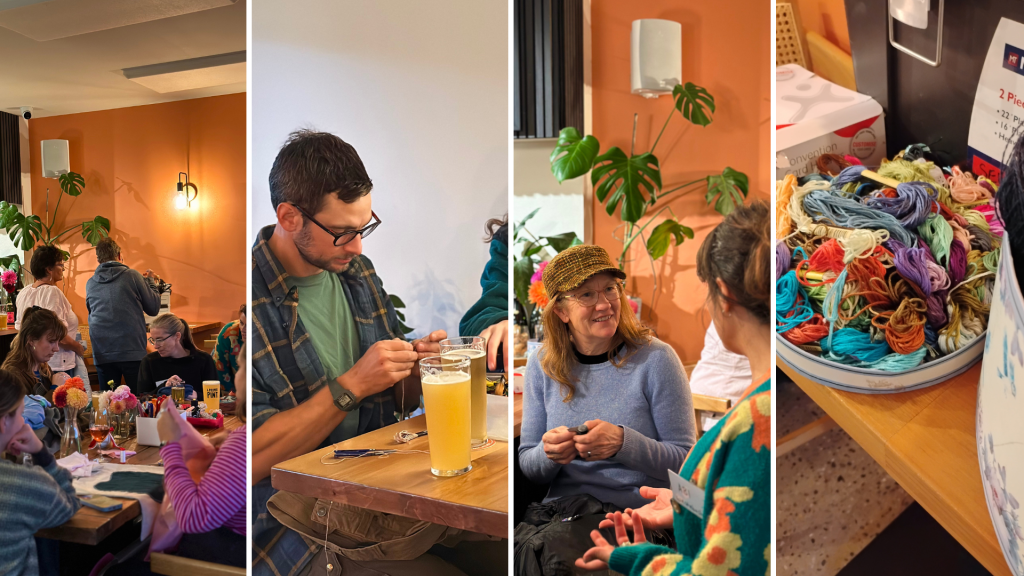
It’s less of a repair event and more of a social club for all those mending jobs you know you could do, but somehow never quite get around to.
Maybe there’s a pair of trousers that has been sitting in the cupboard waiting for a button. A favourite jumper has a little hole you’ve been meaning to stitch. Or there’s a pile of clothes next to the sewing machine that you’ve been promising yourself you’ll tackle when you have a spare evening.
The problem isn’t always that we don’t know how to fix something. Sometimes we just need to give ourselves the time to actually do it.
That’s what Loose Threads is for.
Bring along something of your own that needs mending, grab a seat and spend a couple of hours getting it done in good company. It’s relaxed and social, with other people working away on their own projects around you and volunteers on hand if you need a little advice.
There’s no pressure to arrive knowing exactly what you’re doing, and it’s not a formal sewing lesson. It’s simply a bit of dedicated time to mend, chat and hopefully head home with one less job sitting at the bottom of the to-do list.
Mending opens up secondhand possibilities too
Knowing a few basic mending and alteration skills can change the way you shop secondhand.
Those great trousers that are just a little too long? You can hem them. A shirt you love but wish was a little more fitted? That might be an easy alteration. And when the secondhand jeans you’ve worn hundreds of times eventually wear through at the knee, you might feel confident enough to patch them rather than replace them.
When we know we can mend, alter and look after our clothes, secondhand shopping gets a whole lot more interesting.
It also helps us move away from the idea that clothes need to stay perfect, pristine and new to have value. Clothes change as we wear them. They fade, soften and sometimes need a little attention. A button can be replaced, a hem can be altered and a worn knee can be patched.
Buying secondhand gives clothes another chapter. Knowing how to look after them helps make it a longer one.
Loose Threads is sold out this time around, which tells us there’s plenty of appetite in our community for making time to mend.
So this Secondhand September, have a rummage through your wardrobe. Pull out that thing you’ve been meaning to fix, sew on the button, finally hem those trousers, or have a go at a repair you’ve been putting off.
And next time you’re shopping secondhand, maybe look at things a little differently. A pair of trousers being too long doesn’t have to be a dealbreaker. Sometimes a small alteration is all it takes to turn a good find into something you’ll wear for years.